



































- In times of chaos and unpredictability, astrology steps in as a soothing guide, helping us interpret life’s twists and turns.
- Its broad appeal stems from inclusivity—offering a sense of purpose when conventional systems fall short.
By Rajkumar Solanki
Astrology enthusiasts often dive deep beyond their sun sign, charting their moon and rising signs while scrolling through dedicated social media feeds or app notifications. Though widely regarded as a pseudoscience—lacking empirical evidence from rigorous studies—astrology remains a lighthearted avenue for self-discovery. This piece delves into the psychological allure of astrology, drawing on research and perspectives from Jennifer Freed, PhD, a licensed psychologist who also practices astrology. While it doesn’t hold up under scientific scrutiny, astrology’s enduring charm lies in its ability to foster reassurance, affirm personal narratives, and instill a feeling of predictability in an erratic world.
Understanding Astrology at Its Core
At its heart, astrology examines the supposed influences of celestial bodies—like stars and planets—on earthly affairs and personal destinies. This practice traces its roots to the Old Babylonian era more than 2,000 years ago, marking one of humanity’s earliest attempts to link the cosmos with daily existence.
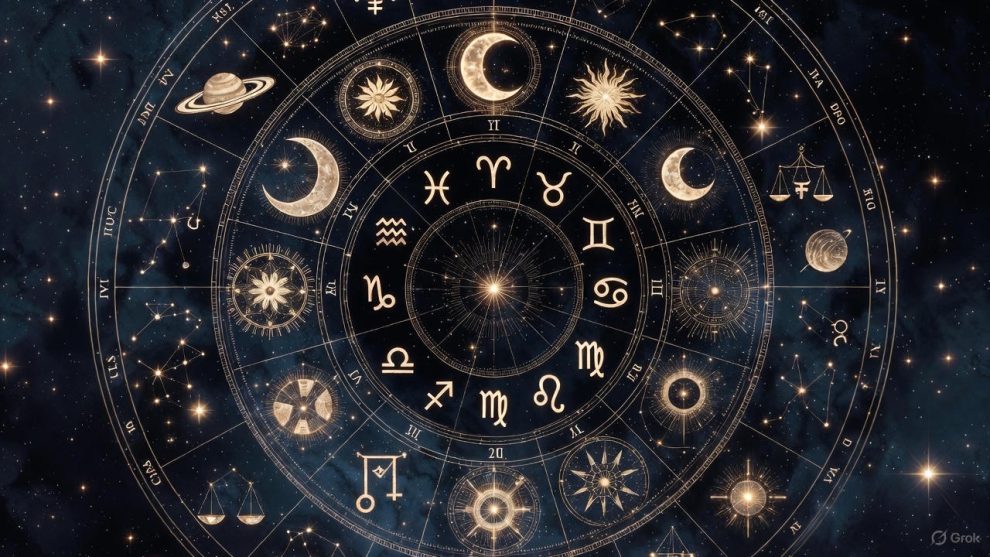
Central to astrology is the zodiac, an imaginary band encircling the sky along which the sun, moon, and planets appear to travel from Earth. Divided into 12 segments, each aligned with a constellation and spanning about a month, the zodiac assigns signs based on birth dates. The cycle kicks off at the spring equinox in the Northern Hemisphere. Here’s a breakdown of the signs and their typical date ranges:
| Zodiac Sign | Date Range |
| Aries | March 21–April 19 |
| Taurus | April 20–May 20 |
| Gemini | May 21–June 21 |
| Cancer | June 22–July 22 |
| Leo | July 23–August 22 |
| Virgo | August 23–September 22 |
| Libra | September 23–October 23 |
| Scorpio | October 24–November 21 |
| Sagittarius | November 22–December 21 |
| Capricorn | December 22–January 19 |
| Aquarius | January 20–February 18 |
| Pisces | February 19–March 20 |
These signs were largely shaped by ancient Greek interpretations, though echoes of Chinese astrology add further cultural layers.
The Psychological Hooks: Why Astrology Resonates
So, why does something unproven by science hold such sway? Psychologically, astrology acts as a balm for the soul, particularly when life feels overwhelming. Studies show it thrives as a way to process intricate challenges, delivering solace amid doubt. Historical spikes in interest—such as during the 1930s Great Depression or the interwar years in Germany—mirror this, with a modern resurgence post-COVID-19 pandemic underscoring the trend.
When established pillars like religion or government leave voids in meaning-making, astrology fills the gap with open arms. As Jennifer Freed, PhD, observes: “Because so many of the traditional institutions have failed to provide a meaning map for people. Also, astrology, unlike those institutions, has been a place of welcoming for all people.”
Fostering a Sense of Mastery Over Chaos
For those with an external locus of control—viewing life events as driven by fate or external factors—astrology offers a comforting narrative. It shifts blame from the self during setbacks and attributes successes to fortunate alignments, subtly nudging toward self-empowerment. This “illusion of control” can spark optimism, turning passive waiting into proactive steps laced with cosmic encouragement.
Illuminating Who We Are
Astrology shines a spotlight on identity, validating innate traits and untapped potentials. It encourages exploration of personal strengths, with affirming descriptions that feel tailor-made. Freed likens it to a gentle motivator: a tool that cheers on growth without judgment. Our brains favor recollections that bolster self-image, so astrology’s vague yet uplifting insights stick easily. The personal touch—factoring in exact birth time and location—lends an air of authenticity, making the experience feel bespoke.
Navigating the Discomfort of the Unknown
Humans crave certainty; ambiguity triggers unease, rooted in our evolutionary drive to predict threats for survival. Astrology counters this by mapping out patterns in the stars, providing a framework for choices. As Freed explains: “As human beings throughout eons, we’ve always been in the quest to understand our existence and make meaning of our lives. Astrology is the oldest system of trying to understand existence and personalities and our personal destinies.”
In an era of information overload, it simplifies the noise, offering digestible wisdom. Freed beautifully captures its supportive role: “It’s like having a fabulous rail down an exquisite staircase. You want to walk down the staircase and take every step mindfully; if you have something really solid to hold on to while you take your own steps, this is an excellent journey.”
Embarking on Your Astrological Journey
While viral memes or daily horoscopes in print can amuse, they’re surface-level fun, per Freed. For a meaningful entry point, opt for astrology applications that prompt for precise birth details. These generate nuanced charts, blending entertainment with introspection for a richer dive.
Astrology, in essence, isn’t about literal predictions but the mental space it carves for reflection. Whether as a casual curiosity or deeper practice, it reminds us of our shared yearning for connection—to the stars, to each other, and to ourselves.